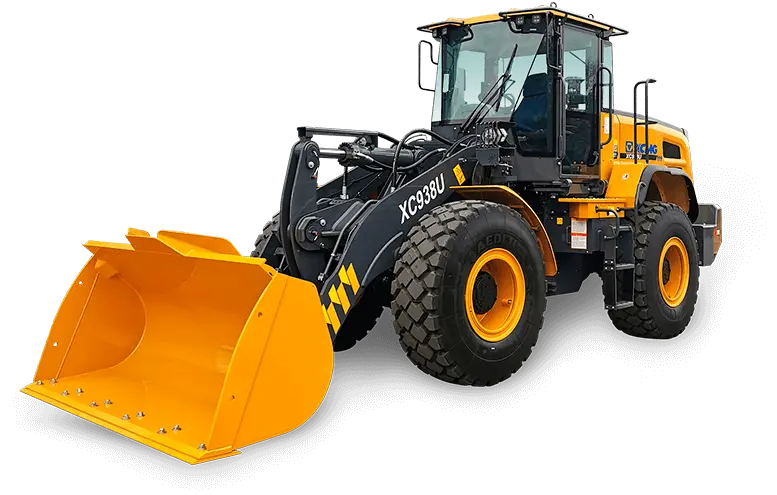
A Kazakhstan winter is a serious test for heavy equipment. In the northern and central regions temperatures fall below minus thirty, and in the south the swings between day and night produce condensation and ice. A machine that was not prepared in advance starts poorly, responds slowly through its hydraulics and breaks down most often exactly when there is the most work: clearing snow, loading, and finishing sites that must be handed over before the end of the year.
It is best to start preparing in October, while it is still above freezing and the components are comfortable to service. Below is a list of what to check first. Always confirm exact intervals, oil grades and tolerances against the operator's manual for your model.
Engine and cooling system
In winter the engine works under the harshest conditions: cold starts, thickened oil, long warm-ups. Before the season, check:
- Engine oil. If an oil change is not far off, it is better to do it early, using the winter or all-season viscosity grade recommended by the manufacturer.
- Coolant. Check the freezing point of the antifreeze with a hydrometer or refractometer. Coolant diluted with water can freeze and damage the engine block.
- Belts and hoses. In frost the rubber hardens, and cracks that were invisible in summer turn into ruptures.
- Heaters. If the machine has a pre-start heater, test it before the cold arrives, not on the first frosty morning.
Fuel system
Summer diesel turns cloudy in frost, paraffin precipitates out of it, and the filter stops letting fuel through. Switch to winter or arctic fuel before stable sub-zero temperatures set in, depending on the region where you work.
Replace the fuel filters and drain the sediment from the separator: water in the fuel freezes in winter and blocks the system. Keep the tank as full as possible, especially overnight, so there is less condensation inside it.
Batteries and electrics
Cold reduces battery capacity, while the starting current needed in frost is higher. Check the charge and condition of the batteries, clean the terminals of oxidation and make sure the alternator charges properly. It is better to replace a weak battery in autumn than to look for a replacement on site.
Check the lighting and beacon lights: daylight is short in winter, and a significant share of the work takes place in the dark. Working headlights are directly tied to safety on the site.
Hydraulics
Hydraulic oil thickens in the cold, working movements become slow and jerky, and the load on the pump and seals grows. Before winter, check the level and condition of the oil and, if necessary, replace it with a grade of suitable low-temperature viscosity as recommended by the manufacturer.
Inspect the high-pressure hoses and the cylinder seals. Small leaks are often missed in summer, but in winter hardened seals begin to leak more. In the morning let the hydraulics warm up: a few smooth movements without load extend the life of the pump.
Undercarriage and cab
For wheeled machines, check the tires: pressure, tread wear, cuts. For tracked machines, check the track tension and the condition of the rollers: soil that sticks and freezes changes the tension and speeds up wear. After each shift, clean the undercarriage of mud and snow before they freeze.
In the cab, check the heater, the window heating and the wiper blades. An operator who is cold and cannot see well works more slowly and makes more mistakes. The door and window seals are worth inspecting in advance so that snow does not blow into the cab.
Working equipment and lubrication
Buckets, booms, joints and pins suffer in winter from stuck ice and thickened grease. Before the season, grease all lubrication points with a compound that keeps its properties in frost, and check the play in the articulated joints. If the play is already noticeable in autumn, under load in winter it will grow quickly. On machines with a centralized lubrication system, check that it delivers grease to every point and that the lines are undamaged.
After work, clean the bucket and the working equipment of stuck material: frozen soil adds weight and gets in the way of the mechanisms.
Storage and parking
If the machine stands idle in winter, put it in a warm or at least enclosed bay whenever possible. At an open parking spot, lower the working equipment to the ground to relieve pressure in the hydraulics, and during long downtime remove the batteries and store them somewhere warm. Before a long stop, fill the tank completely and check the antifreeze.
Do not leave it to the last moment
In autumn service centers are calmer, spare parts are in stock, and equipment can be serviced without a rush. In December the queues grow, and every day of downtime on site costs more than scheduled maintenance. Draw up a preparation schedule for the whole fleet, mark what is already done, and by the first frost your machines will be ready for the season.