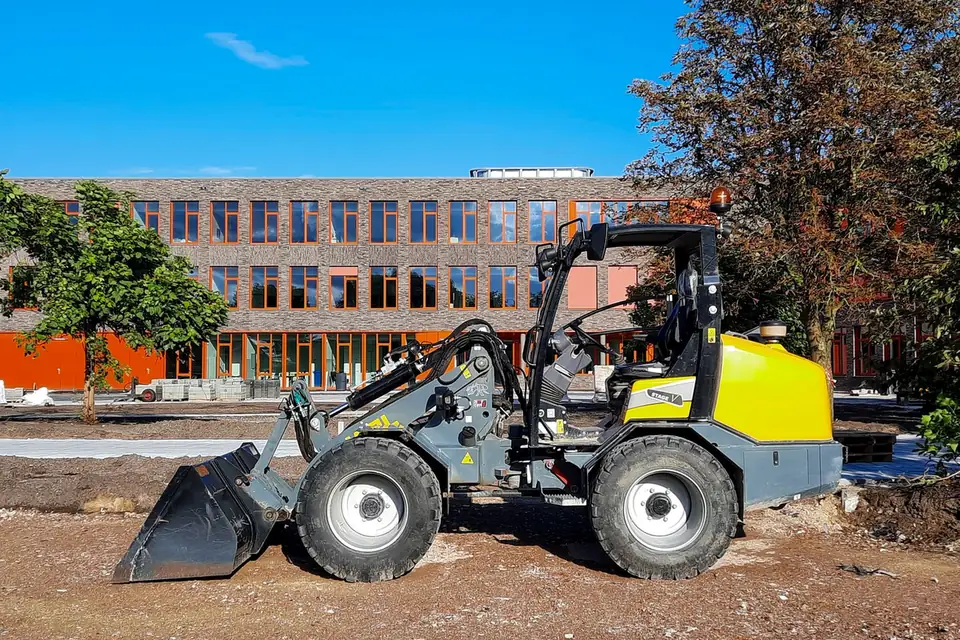
A front-end loader works almost everywhere: on construction sites, in quarries, in bulk-material warehouses, in municipal services and in agriculture. It is precisely because of this versatility that choosing a model can be hard. A machine that is ideal for loading crushed stone in a quarry will be bulky on a tight city site, while a compact loader will not cope with a stream of dump trucks.
A good choice starts not with the catalog but with a description of the tasks the machine will perform every day.
Define the main tasks
Answer a few questions before comparing models:
- which materials you load: sand, crushed stone, soil, snow, coal, grain;
- what volume has to be moved per shift;
- which vehicles you load into and how high their sides are;
- where the loader works: an open site, a tight yard, a warehouse;
- whether the machine needs to work with attachments.
The answers to these questions immediately rule out most unsuitable models.
Lifting capacity and bucket volume
Rated lifting capacity determines what mass the machine lifts without losing stability. The bucket volume must be chosen with the density of the material in mind: for light materials such as snow or grain a larger bucket can be used, for heavy ones such as crushed stone or ore a smaller one, otherwise the machine will work at its limit.
A loader that is too small wears out quickly from constant overload, one that is too big burns extra fuel and is awkward to maneuver. Base your choice on your typical material and the required output per shift.
Dump height and reach
If the loader fills dump trucks or hoppers, check the dump height and the bucket reach. The machine must confidently empty material over the side of the dump truck you use, without the risk of catching it with the bucket. This parameter is often overlooked, and then it turns out that the site has to be built up with fill to allow loading.
Engine and transmission
Judge the engine by real work: is there enough traction to confidently enter a stockpile and climb a slope with a loaded bucket, and how does the machine behave on a cold start. Intensive quarry work needs a power reserve, while for warehouse operations economy matters more.
Pay attention to the type of transmission and ease of control. The operator spends an entire shift in the machine, and smooth gear shifting, a comfortable joystick and good visibility noticeably affect productivity and fatigue.
Attachments
One of the main advantages of a front-end loader is the ability to change the working tool quickly. Besides the main bucket this can be a bucket for light materials, pallet forks, a log grapple, a snow blade or a brush. If you plan to use attachments, find out which quick-coupler system is fitted to the machine and which equipment is compatible with it.
Cab, visibility and safety
Visibility from the cab matters for safety on a site where people and other machinery work nearby. Check the heating and air conditioning: in Kazakhstan the loader works in both heat and frost. Rear-view cameras, good mirrors and work lights make work easier in cramped conditions and after dark.
Machine size and site conditions
Dimensions and turning radius matter where the loader works in confined conditions: in yards, in warehouses, between stockpiles. A machine with an articulated frame is more maneuverable, but it still needs room to turn. If the site is small and volumes are moderate, it is sometimes wiser to choose a more compact model and make more trips than to struggle with a large machine.
Also consider the surface: on soft ground traction and suitable tires matter, on asphalt and concrete the wear resistance of the tread.
Fuel consumption and cost per hour of work
When comparing models, look not only at the purchase price but also at what an hour of the machine's work costs: fuel consumption, service intervals, the cost of consumables. A model that is slightly more expensive to buy but cheaper to run can prove more profitable over a few years. Ask the supplier for consumption data in conditions similar to yours, not only the catalog values.
Service and spare parts
Even a reliable machine needs regular maintenance. Before buying, find out whether there is service in your region, how quickly consumables and main spare parts are delivered, and whether mechanics can come out to the site. A loader standing idle for lack of a filter or a hose costs more than it seems when you choose.
A test on a real task
If possible, watch the machine at work or ask for a demonstration on similar material. Let the operator who will work on it assess the controls and visibility. Matching specifications on paper does not always mean comfort in a real shift.
A properly chosen front-end loader works for years and pays for itself through productivity. Time spent analyzing your tasks before buying saves money and nerves afterward.